Best Starbucks Coffee Beans for the Perfect Cup at Home

Whether or not you live somewhere Starbucks is on every corner, you have almost certainly seen the twin-tailed siren on a green background. The company is one of the most recognizable brands in the world, so it is no surprise that plenty of people want to know which Starbucks coffee beans are worth buying for home.
Starbucks is where many of us first ordered a coffee “our way,” complete with a name on the cup that is sometimes spelled right and sometimes not. The good news is that you don’t need the café to get the taste. Starbucks sells a long list of its core coffees as whole beans for home brewing, from light Blonde roasts to its darkest French Roast.
Let’s be honest: Starbucks may not sell the best coffee in the world, but its standard is consistent, and the range is wide enough that almost anyone can find something they like. If you are buying Starbucks beans for the first time, or you are a regular who wants to branch out, this list sums up the whole-bean coffees that are still sold today and what each one is like.
Updated September 2026: product availability, specs and prices re-checked.
1. Pike Place Starbucks Coffee Beans
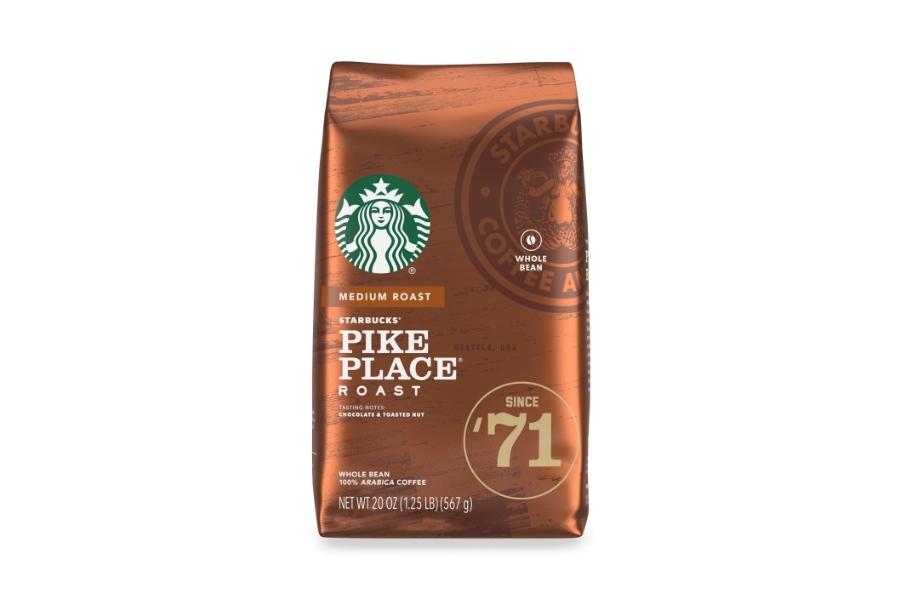
Anyone who has visited a Starbucks at least once has probably had this one. It’s Pike Place Roast, named after Seattle’s Pike Place Market, where the first Starbucks store opened. Starbucks says it created the blend in 2008 after customers asked for a coffee they could drink all day.
Why put the most standard coffee on a list of the best? Because it is easy to like. Pike Place is a medium roast of Latin American beans, and Starbucks lists its tasting notes as cocoa and rich praline. It doesn’t ask you to have any particular taste or expectations. If you want a good, standard cup without surprises, this is the one.
Pros of Pike Place
- Smooth, balanced medium roast
- Easy for almost anyone to enjoy
- Sold as whole bean, ground, K-Cup pods and Nespresso capsules
Cons of Pike Place
- It’s a standard coffee, with nothing unusual about it
2. Sunsera Blend Starbucks Coffee Beans
The original version of this list included Siren’s Blend, a limited-edition medium roast that is no longer part of Starbucks’ regular at-home lineup. In its place, we’d point you to the newest blend in the range: Starbucks Sunsera Blend.
Sunsera is a Blonde (light) roast. Starbucks describes it as “our smoothest, brightest coffee yet,” with notes of bright citrus and toasted almond. The company pitches it as a coffee that works both hot and iced, which makes it a good pick if you switch to iced coffee in summer.
If most Starbucks coffee tastes too roasty to you, this is the place to start.
Pros of Sunsera Blend
- Light, bright flavor with citrus and almond notes
- Meant to work hot or iced
- Also sold ground, as K-Cup pods and as Vertuo capsules
Cons of Sunsera Blend
- Too mild for people who like dark roasts
3. French Roast Starbucks Coffee Beans
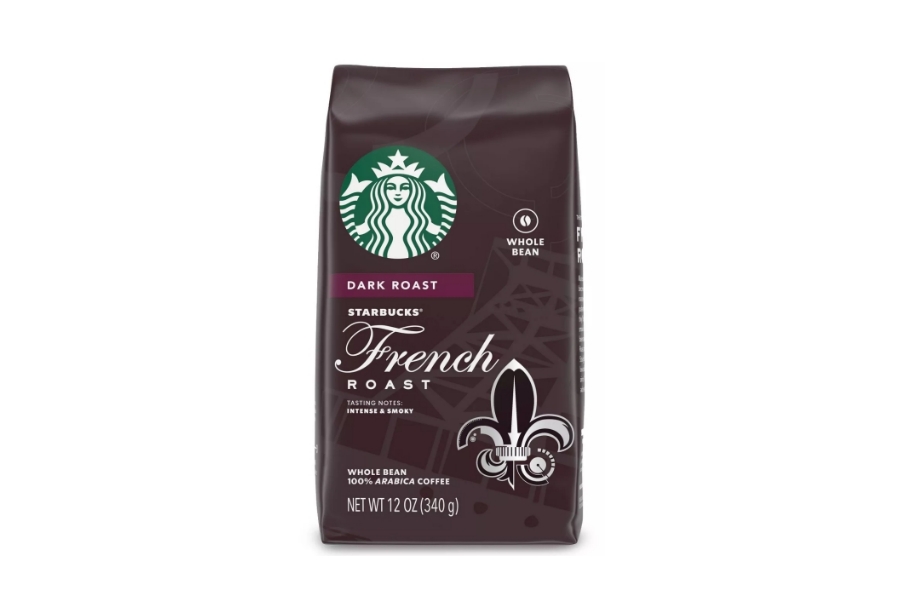
Calling French Roast dark is an understatement. Starbucks says this is as dark as its roasts get, and the beans come out close to black and shiny with oil. The company lists the tasting notes as dark caramel and sweet smoke.
French Roast is a multi-region blend of Latin American and Asia/Pacific beans, and Starbucks describes it as light-bodied with low acidity. One common belief is worth correcting: a darker roast does not mean more caffeine. The difference in flavor is big, but the caffeine difference between roast levels is small.
Pros of French Roast
- Starbucks’ darkest, smokiest roast
- Low acidity
Cons of French Roast
- The smoky, roasty taste is too much for many people
4. Caffe Verona Starbucks Coffee Beans
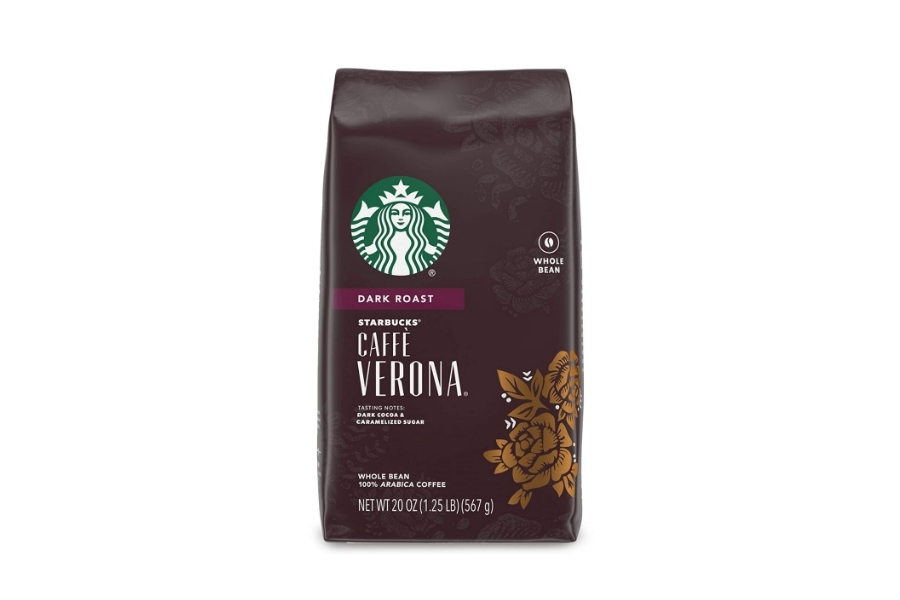
Another dark roast from Starbucks is Caffè Verona. It started in 1975 as a blend made for a single Seattle restaurant and later became a regular Starbucks coffee. Starbucks lists its tasting notes as dark cocoa and caramelized sugar, and it is a blend of Latin American and Asia/Pacific beans.
Compared with French Roast, Verona is a bit less intense, and many drinkers find it less bitter. It is a good choice for people who want a strong morning coffee without the smoky edge.
Pros of Caffe Verona
- Dark cocoa and caramelized sugar notes
- Full body without the smokiness of French Roast
- Also sold as a decaf version
Cons of Caffe Verona
- Still too strong for people who prefer light coffee
5. House Blend Starbucks Coffee Beans
This spot used to go to Guatemala Antigua, a single-origin medium roast that Starbucks no longer sells as a regular at-home coffee. For a smooth medium roast that is easy to find, our pick now is House Blend.
House Blend is the first blend Starbucks ever created, back in 1971. It is made from Latin American beans, and Starbucks lists toffee and dusted cocoa as its tasting notes. It sits between Pike Place and the dark roasts: a little more roasty than Pike Place, but still balanced.
Pros of House Blend
- Balanced medium roast with toffee and cocoa notes
- Easy to find in grocery stores
- Works well in drip machines
Cons of House Blend
- Not much different from Pike Place for casual drinkers
6. Espresso Roast Starbucks Coffee Beans
The Kopelani Blend that appeared here before was a seasonal coffee sold mainly in Hawaii, and it is not part of the at-home lineup. If you want a dark roast with caramel sweetness, Espresso Roast is a better bet.
Starbucks created Espresso Roast in 1975, and it is still the base for the espresso drinks in its stores. The company lists its tasting notes as rich molasses and caramel. It’s a multi-region blend, and you don’t need an espresso machine to use it. It also works in a moka pot or a drip brewer if you like a bold cup.
Pros of Espresso Roast
- The same espresso base Starbucks uses in its stores
- Molasses and caramel sweetness
- Good for lattes and cappuccinos at home
Cons of Espresso Roast
- Dark and intense, not for mild coffee fans
7. Veranda Whole Starbucks Coffee Beans
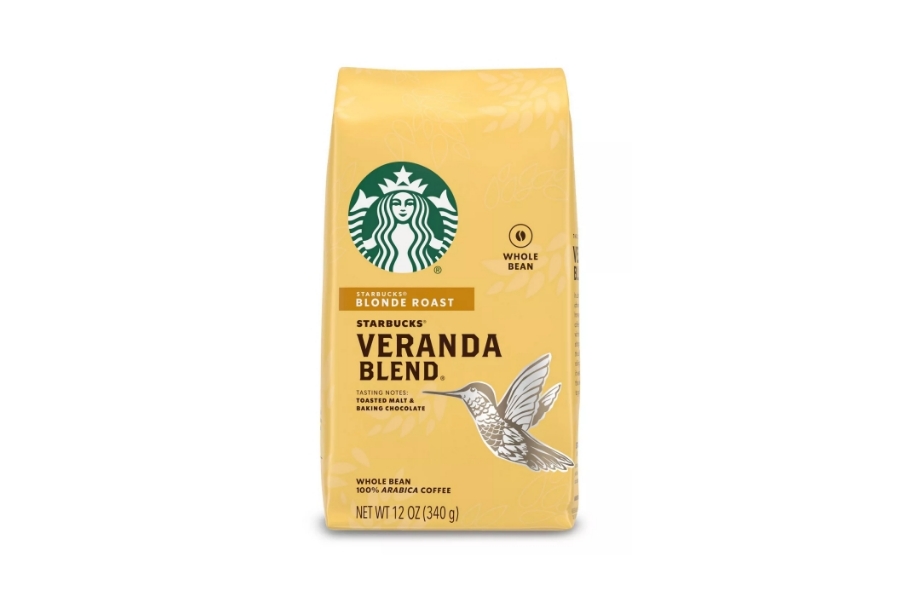
If you prefer lighter coffee, try the Veranda Blend. It is a Starbucks Blonde Roast made from Latin American Arabica beans, so it is much lighter than the dark roasts above. Starbucks lists its tasting notes as toasted malt and milk chocolate.
Veranda is a favorite among people who like an easy-going cup. It is mellow enough to drink black, and Starbucks notes that it mixes well with milk.
Pros of Veranda
- Soft malt and milk chocolate flavor
- Easy to drink
- Good in lattes and with milk
Cons of Veranda
- Too mild for anyone who wants a strong, roasty cup
8. Komodo Dragon Starbucks Coffee Beans
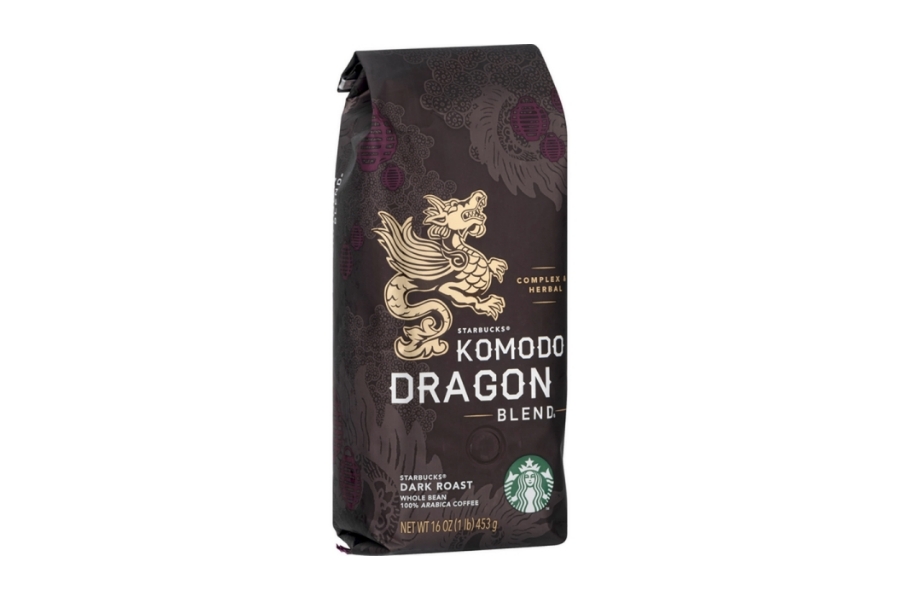
The Komodo Dragon Blend is named after the giant lizards of Indonesia, and the coffee is built around Indonesian beans. It is a dark roast with an earthy, herbal flavor and a lingering spice. Starbucks describes it as having a big, syrupy body.
It is still sold through Starbucks and in many grocery stores as a 1 lb bag of whole beans. It is not as easy to find as Pike Place or French Roast, though, so you may need to look for it online.
Pros of Komodo Dragon
- Noticeable herbal, earthy character
- Full, syrupy body
- Very distinct taste
Cons of Komodo Dragon
- Not something to offer someone who rarely drinks coffee
- Harder to find than the core blends
9. Sumatra Starbucks Coffee Beans
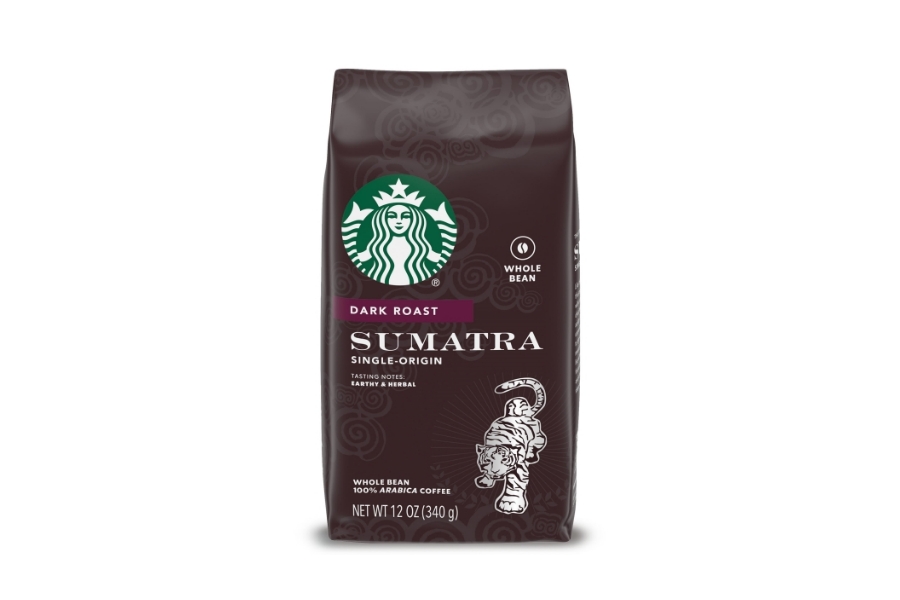
Despite the old name on this list, Sumatra is not a blend at all. It is a single-origin coffee from the Indonesian island of Sumatra, and Starbucks has sold it since 1971. It is a dark roast, and Starbucks describes it as bold and full-bodied, with muted acidity and notes of rich herbs and rustic spice.
It comes as whole beans, ground coffee, K-Cup pods and Nespresso capsules. You can brew it in almost any way, but a French press or drip machine brings out the heavy body well.
Pros of Sumatra
- Simple but rich, earthy taste
- Low acidity
- Easy to find in several formats
Cons of Sumatra
- The earthy, herbal taste is not for everyone
10. Starbucks Breakfast Blend Whole Beans
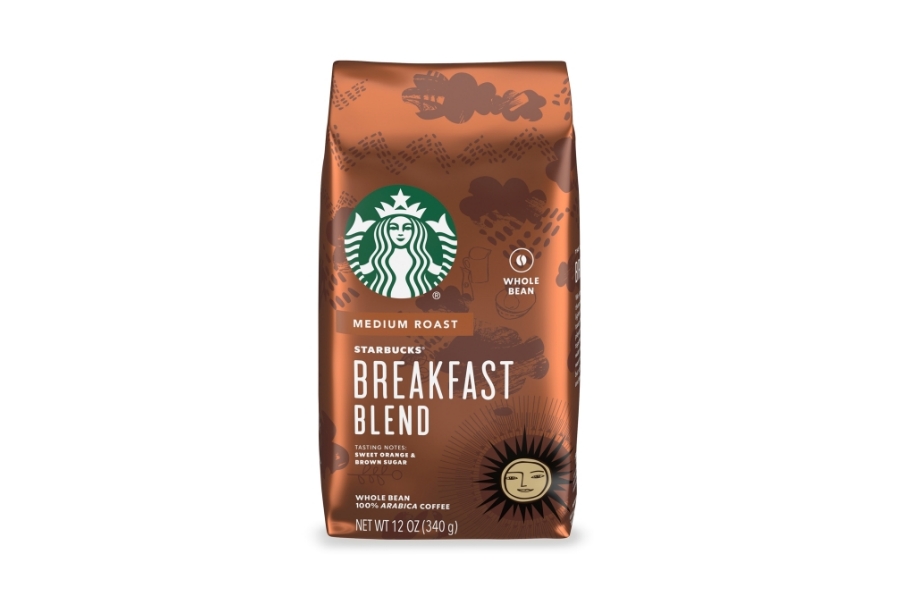
Breakfast Blend was introduced in 1998 for people who want a milder cup. Starbucks calls it its lightest medium roast, “more toasty than roasty,” with notes of sweet orange and brown sugar. The beans come from Latin America.
It tastes the way many people expect coffee to taste, just a little brighter. That’s the appeal: it is lively and easy to drink first thing in the morning.
Pros of Breakfast Blend
- Easy to brew
- Easy to drink
- Light, lively flavor with a soft sweetness
Cons of Breakfast Blend
- Not exotic at all if you want to try something new
What to Look For
- Roast level: Starbucks sorts its coffees into Blonde, Medium and Dark roasts. Start with Blonde or Medium if you usually add little or no milk.
- Whole bean or ground: whole beans stay fresh longer once the bag is open, but you need a grinder.
- Format: most of these coffees also come as K-Cup pods or Starbucks by Nespresso capsules if you brew with a pod machine.
Conclusion
Starbucks sells enough whole-bean coffees to cover everything from light Blonde roasts to its darkest French Roast. Which one you’ll like depends on your mood as much as your taste. Lighter coffees such as Veranda, Sunsera and Breakfast Blend are easy to drink and pair well with milk and sweeteners. Dark roasts such as French Roast, Espresso Roast, Sumatra and Komodo Dragon are for people who want a strong, heavy cup.
You are the final judge. Treat this list as a starting point and try a couple of bags before you settle on a favorite.
Featured image: nbcnews.com