
Pressure Cooker vs Air Fryer: Pros, Cons and Which to Buy

This pressure cooker vs air fryer guide is for people who want good food with as little effort as possible. Cooking tech has moved a long way from wood-fired stoves, and two countertop appliances now sit in a lot of home kitchens: the electric pressure cooker and the air fryer. They look a little alike, but they cook in very different ways. So what is the difference?
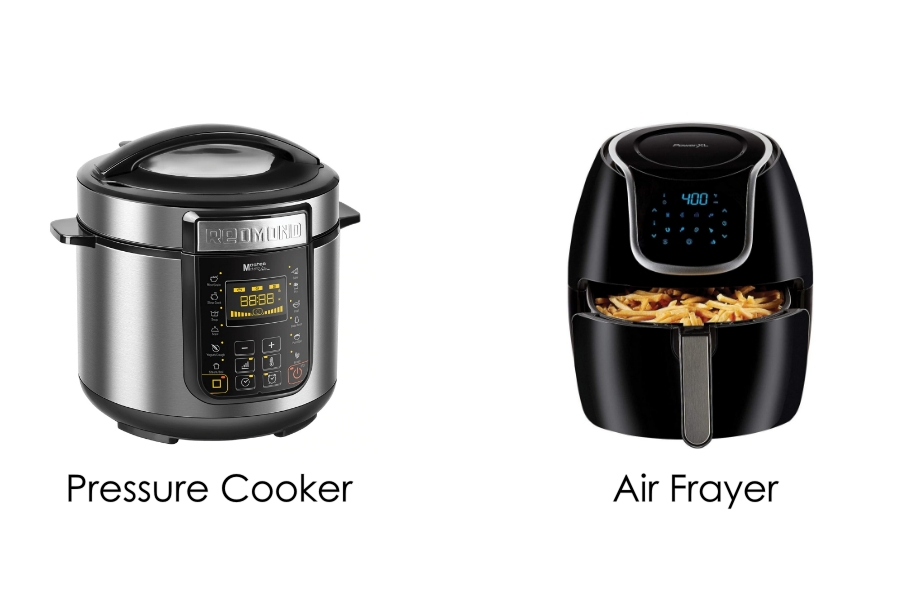
A pressure cooker is a pot with a lid that locks and seals. As the liquid inside heats, steam builds up and raises the pressure. Higher pressure raises the boiling point of water above 100 degrees Celsius (212°F), so food cooks faster. Because the pot is sealed, very little steam escapes, and most of the moisture stays in the food.
An air fryer is a small convection oven. A heating element and a powerful fan blow hot air around the food at high speed. That browns and crisps the outside, much like deep frying, but with a small fraction of the oil. Deep-fried food may not be the healthiest choice, but most of us agree those fries taste good, and the air fryer gets you close.
Both can cook dinner. The differences are not obvious from the outside, which is why the pressure cooker vs air fryer question comes up so often. Ideally you would own both. If you can buy only one, here is how they compare.
Updated September 2026: product availability, specs and prices re-checked.
Pressure Cooker vs Air Fryer: Main Features
Here are the main points to weigh before you buy:
Process of Cooking
This is the difference most people only notice once they start cooking. A pressure cooker needs to build pressure and stay sealed. You cannot open it partway through to taste, stir or add an ingredient. To make a change, you have to release the pressure first, either naturally or with the quick-release valve, then bring it back up to pressure again.
An air fryer works with hot moving air, not pressure. You can pull the basket out at any time to shake the food, check it or flip it. Most models pause the fan and heat while the basket is out and pick up where they left off when you slide it back. Shaking the basket halfway through is standard advice for even browning.
Liquid and Oil
The two appliances need very different amounts of liquid.
An air fryer needs little or no oil. A light spray or a teaspoon to a tablespoon tossed with the food is usually enough for crisp results. Because the hot air dries the surface, lean foods can dry out if you overcook them.
A pressure cooker always needs some thin liquid, such as water or broth, to make steam. Manufacturers usually list a minimum, often around one cup for a 6-quart pot, so check your manual. Because the pot is sealed, little liquid evaporates, so you typically use less than you would for the same dish simmered in an open pot.
Size and Capacity
Electric pressure cookers are sold by pot size. Common sizes are 3, 6 and 8 quarts. A 6-quart pot suits most families of three to five. You also cannot fill a pressure cooker to the top: most makers say no more than two-thirds full, and no more than half full for foods that foam or expand, like beans and grains.
Air fryers are sold by basket or oven capacity, from about 2 quarts up to 8 quarts or more, plus dual-basket and oven-style models. Here is the catch: capacity is not the whole story. Air-fried food needs to sit in a single layer with space for air to move. So a 6-quart air fryer may only crisp a couple of servings of fries at once, while a 6-quart pressure cooker can make a large pot of chili.
Functionality
What each appliance can do depends a lot on the model and price. Modern electric pressure cookers are really multicookers. Most can pressure cook, sauté, slow cook, steam and cook rice, and many add yogurt, sous vide or sterilize settings. What they cannot do on their own is make food crispy.
Air fryers air fry, roast, bake and reheat, and many add broil and dehydrate settings. They are good at browning and crisping, and at cooking small portions quickly. They cannot pressure cook, boil or make a soup.
If you want both, combination appliances exist. The Instant Pot Duo Crisp + Air Fryer, for example, comes with two interchangeable lids, one for pressure cooking and one for air frying, and Instant lists 11 cooking functions for it. The trade-off is a bulkier appliance and a separate lid to store.
Recipes
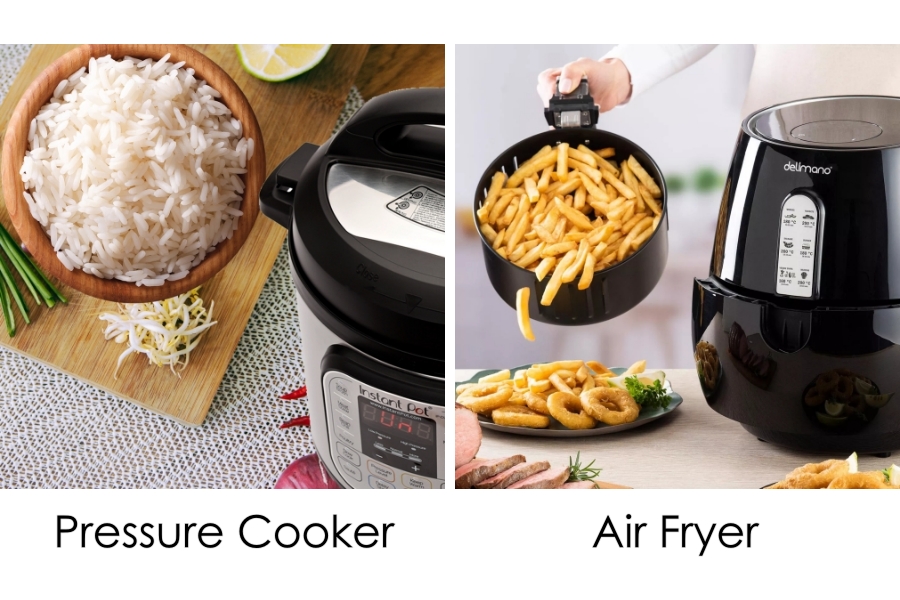
Both appliances can cook meat, vegetables and even some desserts. But each has recipes it handles well and recipes it should not attempt.
A pressure cooker relies on steam, so it shines with moist cooking: rice, beans, stews, soups, stocks, pulled pork and tough cuts of beef that normally need hours of braising. The sauté setting can brown meat before pressure cooking, but it will not give you the crunch of French fries or chicken wings.
An air fryer is best at food you would normally fry or roast: chicken wings, fries, breaded fish, roasted vegetables and reheated leftovers that you want crisp again. It is not the tool for rice, pasta or anything that needs to simmer in liquid.
Health Benefits
If you want to cut calories but love fries, the air fryer is the more useful machine. It lets you get a fried-style texture with far less oil than deep frying.
A pressure cooker does not change the healthiness of a dish much by itself. What you cook matters more. Its advantages are speed and the fact that it makes cooking dried beans, whole grains and homemade soups easy enough to do on a weeknight.
Safety
Both appliances are safe when you follow the manual, but each has its own risks.
Modern electric pressure cookers have several safety features, including lids that stay locked while the pot is under pressure. Still, releasing steam can scald you. Keep your hands and face away from the valve during a quick release, and never try to force the lid open. Check the sealing ring and the valve regularly. A worn, dirty or badly seated ring can stop the pot from sealing.
An air fryer gets hot on the outside and blows hot air out of its vent. Give it space on the counter, keep it away from walls and cabinets, and do not cover the vent. Use it on a dry surface, keep the cord away from water, and replace it if the cord or plug is damaged.
Related reading
Conclusion
Deciding between the two comes down to what you cook most. Ask yourself a few questions. Do you make a lot of soups, stews, beans and rice? Do you want crispy food with less oil? Do you usually cook for one or two, or for a family?
If you mostly braise, simmer and batch cook, get a pressure cooker. If you mostly roast, reheat and crave crunch, get an air fryer. If you want both and have the counter space, a combination unit is worth a look. Whichever you pick, buy from a well-known brand with a solid warranty and easy access to replacement parts like sealing rings and baskets. Happy cooking!
Featured image: tablefortwoblog.com