Vitamix E320 vs 7500: Main Differences and Similarities

The Vitamix E320 vs 7500 question comes up often, and for good reason. Both blenders can handle smoothies, nut butters, frozen desserts, hot soups and grinding. Blending results are close. The real differences come down to the motor base design, noise, weight and price.
Both models are still sold new by Vitamix in 2026, so this is a straight comparison. Here is how the Explorian E320 stacks up against the 7500.
Updated September 2026: product availability, specs and prices re-checked.
Brand Overview
 Vitamix is a family-owned company based in Ohio with a long track record in both home and commercial kitchens. Its full-size blenders are known for strong motors, long warranties and containers that last for years.
Many professional kitchens use Vitamix machines, and the brand has a loyal home following. The E320 and 7500 both belong to its simpler, dial-controlled lineup, without the touchscreens or preset programs of the Ascent and Venturist models.
Vitamix E320 vs 7500: Comparison
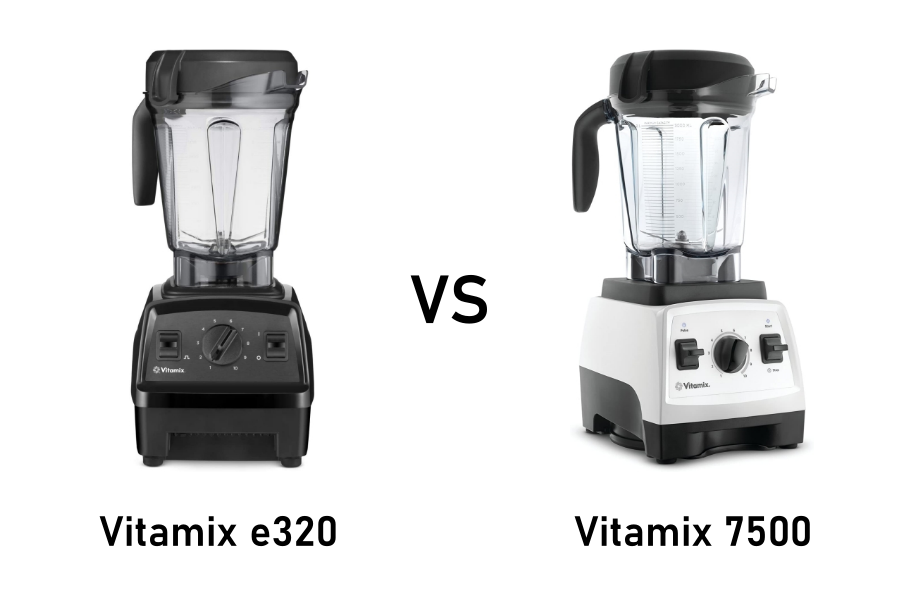
The two blenders overlap more than they differ. Both use a 2.2 peak horsepower motor, a 64-ounce low-profile container, ten variable speeds and a pulse switch. The 7500 sits in Vitamix’s newer-generation motor base, while the Explorian E320 is built on the older classic-style base.
Below, each model is compared by power, controls, container, weight, warranty and price.
Motor and Package
Vitamix rates both motors at 2.2 peak horsepower, and both run on a standard 120V household outlet. That is enough power for frozen fruit, fibrous greens and nut butters.
The difference is in the base. Review sites note that the 7500’s newer base adds a radial cooling fan and noise-dampening design, and they consistently describe it as the quieter of the two. The E320 is louder at high speed, closer to the older classic Vitamix machines.
Both come with the motor base, a 64-ounce low-profile container with lid, a tamper and a getting-started guide. Vitamix also sells an E320 bundle with a personal cup adapter and two 20-ounce cups.
Interface and Control
The controls are nearly identical. Each blender has a variable speed dial with ten settings, an on/off switch and a pulse switch. Neither has preset programs or a timer, so you control the blend by hand. Both have thermal protection that shuts the motor off if it overheats.
If you want presets or a digital timer, you would need to step up to an Ascent or Venturist model. Between these two, there is no real winner on controls.
Container and Blades
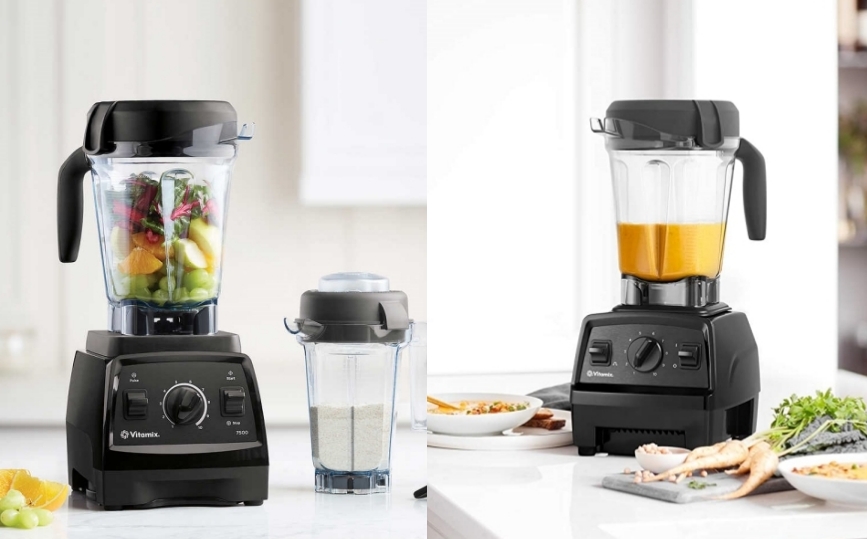
Both blenders ship with a 64-ounce low-profile container made of BPA-free Tritan copolyester. That is large enough for family-size smoothies and soups. The low profile lets both machines fit under most kitchen cabinets. Vitamix lists the 7500 at 17.5 inches tall and the E320 at 18 inches with the container on the base.
The blades are laser-cut stainless steel on both models. Blending times are very similar, since the motor ratings and container shapes are the same. Owners who have used both mostly notice the sound, not the speed.
Weight and Price
Vitamix lists the 7500 at 12.5 pounds and the E320 at 10.5 pounds. The two-pound gap makes little difference on a countertop.
Price is the bigger gap. On the Vitamix US site, the 7500 lists for about $600 and the E320 for about $380 (September 2026). Retailer sale prices on both move around, so it pays to compare. Both carry a 7-year warranty from Vitamix.
Vitamix E320 vs 7500: Pros and Cons
Here are the main pros and cons of each blender to help you match one to your needs.
Vitamix E320
Pros:
- Much lower list price;
- Same 2.2 peak HP motor rating as the 7500;
- 64-ounce low-profile container;
- BPA-free container;
- 7-year warranty;
- Lighter base.
Cons:
- Noticeably louder than the 7500, according to reviewers;
- Older-style motor base without the 7500’s noise dampening.
Vitamix 7500
Pros:
- Quieter operation, per owner and reviewer reports;
- Simple dial controls;
- Newer motor base with a radial cooling fan, per reviewers;
- Powerful 2.2 peak HP motor;
- Low-profile container fits under cabinets;
- 7-year full warranty.
Cons:
- Costs about $220 more at list price;
- No presets or timer;
- Slightly heavier.
Vitamix E320 vs Vitamix 7500: Verdict
The E320 and 7500 blend almost the same way. Same motor rating, same container size, same controls. The choice comes down to how much you care about noise and how much you want to spend.
Pick the 7500 if you blend often, at high speed, in an open kitchen where noise matters. Pick the E320 if you want Vitamix performance and warranty for about $220 less at list price and can live with a louder machine.
Featured image: smoothiespot.com